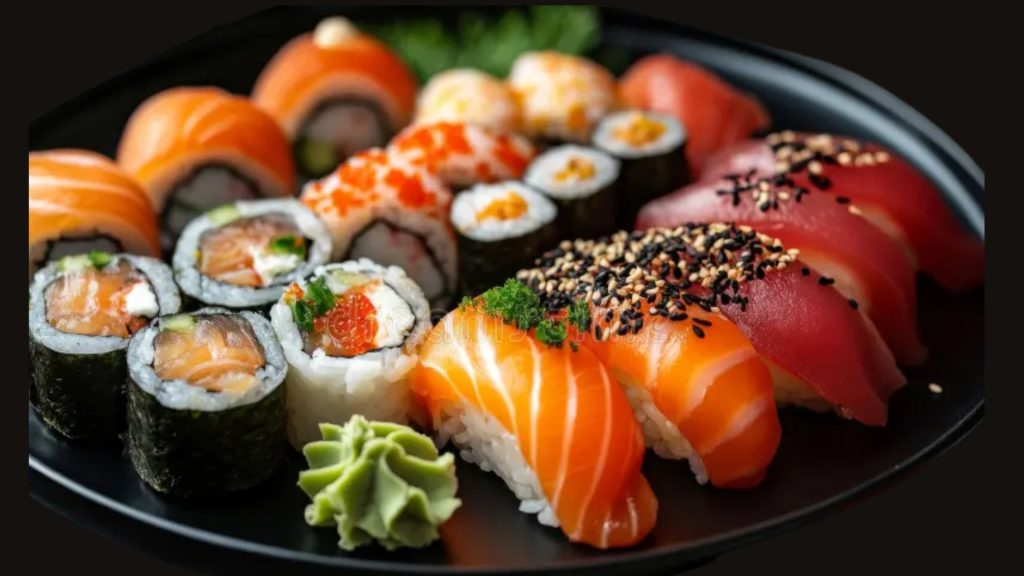
introduction: How Many Calories in Sushi?
Sushi has become a very popular food in the United States, enjoyed for its freshness, diversity, and unusual presentation. Whether mealtime, evening dinner, or evening out, it is quite popular among many people because it tastes lighter compared to fast food and gives one endless option.
But if you are observant of your diet, a precise interrogation occurs to you: how many calories in sushi? The response isn’t straightforward, since sushi takes a lot of forms — some are extremely light and healthy, whereas others contain plenty of rice, sauces, or fried coatings. That’s why knowing how many calories in sushi is vital if you’re eager to indulge in it without having to stress about your health purposes.
What is sushi?
Sushi is an old Japanese dish that has become very common in America and worldwide. Sushi really is just basic seasoned vinegar rice mixed with fresh ingredients such as raw fish, vegetables, or even cooked seafood. Several forms have been created by chefs over the years, from light and stylish sashimi to heavy rolls with mayonnaise or batter-fried tempura glazes. For those mindful of nutrition, the question often arises: how many calories in sushi? Understanding how many calories in sushi not only clears this confusion but also helps you choose wisely between lighter options and indulgent specialty rolls.
Because of its versatility, the sum of calories in sushi depends heavily on what you’re getting. That is why when you inquire about how many calories in sushi, the answer isn’t one figure it all depends on the dish of sushi that you order. People often search how many calories in sushi because every roll, nigiri, or sashimi has a different nutritional value. To really understand how many calories in sushi, you must consider the rice, fish, vegetables, and sauces used after its preparation.
Why Sushi Calories Differ
Possibly the most fascinating facet of sushi is just how versatile it is. Unlike a motionless recipe dish, sushi can be ready masses of traditions, so the calorie content is never the same. A basic salmon sashimi part can feel very light, while a specialty roll outdid with fried shrimp, hot mayo, and salve cheese can have some periods the calories.
The most momentous factors influencing calorie changes are the type of rice, fish or protein, toppings, and sauces. Even portion sizes contribute — a small piece of nigiri may seem innocent, but consuming ten quickly stands up. Therefore, when individuals ask how many calories in sushi, it would be clear that it’s not a matter of sushi overall, but rather of the particular choices you are making at home or at the café. By keeping track of how many calories in sushi, you can enjoy it guilt-free while staying aligned with your health goals.
Sashimi& Nigiri – Light Choices
When individuals consider how many calories in sushi, the lightest options almost invariably reduce to sashimi and nigiri.
- Sashimi is nothing but thinly cut raw fish served without rice. Because it’s all protein and good fats, it will of sequence be lower in calories than sushi rolls. For example, a single piece of salmon sashimi would comprise about 30 to 40 calories, making it a clean choice for those who want the taste of sushi but without the carbs.
- Nigiri, by contrast, contains of a minor piece of fish atop a piece-sized rice mound. Although still inferior in calories than most rolls, the rice contributes calories. A tuna or salmon nigiri naturally covers 50 to 70 calories, conditional on the plateful size.
These alternatives are favored by clients who enjoy eating sushi but also do not demand to sacrifice the balance of their meal. Having sashimi or nigiri permits you to experience the unique flavor of fish without filling up on calories overall. For those wondering how many calories in sushi, sashimi and nigiri are often the lightest choices. When you compare how many calories in sushi between sashimi and rolls, you’ll find the difference is significant. Understanding how many calories in sushi helps you make smarter choices while still enjoying authentic Japanese flavors.
Maki & Specialty Rolls
Whereas sashimi and nigiri are light options, the majority of Americans prefer their sushi as maki rolls or as innovative specialty rolls. These are where the difference in calories is most evident.
Maki rolls
- such as cucumber roll, tuna roll, or salmon roll tend to be comparatively low in calories. A basic cucumber roll can cover less than 150 calories for six bits, and a tuna roll might contain between 180 to 200 calories. These rolls contain fewer ingredients, less sauce, and less rice, making them simpler to include in a diet that is healthy.
Specialty rolls
- Can be meaningfully durable. A dragon roll, volcano roll, or tempura shrimp roll capacity have browned guts, cream cheese, spicy mayo, or eel sauce. These enhance the rolls’ flavor but also increase their calories significantly sometimes 400 to 500 calories per roll, sometimes even more.
This is why, when people inquire about how many calories in sushi, the answer relies heavily on whether you go for a light maki roll or a sauce-laden sphere roll. If you need to enjoy sushi but don’t want to overdo, traditional rolls are the well choice, while specialty rolls are best savored sparingly as an indulgence. So, understanding how many calories in sushi helps you make smarter dining decisions without giving up the flavors you love.
Ingredients Breakdown
Breaking down the basic ingredients that found the popular of sushi rolls aids in understanding totally how many calories in sushi:
Rice Sushi rice has vinegar, sugar, and salt added to it, creation it more calorie-rich than steady steamed rice. Almost 200 calories are contained in one mug of sushi rice. The Harvard T.H. Chan School of Public Health
Refined white rice has a greater glycemic index than brown rice and thus will increase blood sugar levels more quickly. Having brown rice sushi is a better option.
Fish Raw fish like salmon, tuna, or yellowtail contain lean protein then omega-3 fatty acids, which show an significant part in mood health. According to the National Institutes of Health (NIH)
emphasizes the omega-3 advantages, such as lower inflammation and better cardiovascular performance. Fish tends to add around 30 to 60 calories per ounce, varying with the variety.
Vegetables – Ingredients such as cucumber, avocado, and seaweed provide fiber, vitamins, and reserves with reasonably rare calories. The USDA Food Data Central specifies that cucumber only has 8 calories in a half-cup, so fruitarian rolls are a low-calorie special.
Shi Calories Relative to Other Foods
If we compare how many calories in sushi to other foods such as pizza, burgers, and pasta, sushi inclines to look like the improved and brighter of the three. Yet, the calorie level would alter with the type of sushi roll or ingredients. This means that understanding how many calories in sushi is essential before assuming it is always the healthier option. By being mindful of how many calories in sushi, you can enjoy your favorite rolls while still making balanced choices for your diet.
Sushi (normal roll, 6–8 pieces):
- Approximately 200–350 calories. Sashimi or nigiri would be abundant lighter, taking about 100 to 150 calories per helping.
Pizza (1-part, regular crust, cheese):
- About 285 to 350 calories each slice, with a 2 or 3 slice portion addition up to 700 to 1,000+ calories.
Burger (regular cheeseburger):
- 300 to 500 calories for a only burger. Bigger fast-food burgers with trappings such as bacon or double burgers may have 800 to 1,200 calories.
Pasta (1 teacup cooked with sauce):
- About 250–400 calories per teacup. And as restaurant portions typically contain 2 to 3 cups, a whole bowl can equal 600 to 1,200+ calories, especially when cream-based pastes are used.
Healthy Eating Tips with Sushi
It doesn’t have to be a derailment for your diet goals. With good decisions, it can both be a special treat and a nutritious meal. Below are some healthy eating tips with sushi that extend beyond basics:
Begin with Sashimi as Your Appetizer
A couple of sashimi (just fish, no rice) provide protein initially, so you get full before going to higher-calorie rolls.
Try Ponzu or Lemon Instead of Soy Sauce
Reducing sodium is a healthy eating trick that works best with sushi. A squeeze of ponzu or lemon keeps taste in the high zone but salt in the low zone.
Eat through Chopsticks to Eat Mindfully
Slowing down by eating gentler with chopsticks permits you to appreciate each mouthful and avoid overeating.
Pick Veggie Powered Sides
Ditch fried tempura for miso broth, edamame, or seaweed salad. They’re packed with nutrients and permission your meal light.
Stay Hydrated Between Bites
Water counteracts the sodium in sushi and saves digestion moving.
Conclusion
Be included in a healthy diet. The reply relies on the kind of roll or style you go for. Sashimi and nigiri are inherently lighter and lower in calories, but specialty rolls with sauces and cooked ingredients can be much higher. If you enjoy Japanese food, you may often ask yourself how many calories in sushi and whether it fits your lifestyle. Understanding how many calories in sushi helps you make wiser decisions and balance your meals more effectively. By being aware of how many calories in sushi across different types, you can enjoy your favorite dishes while keeping your diet healthy and satisfying.
In case you are looking to control your weight or merely adopt a healthier way of life, it is helpful to check the calorie before ordering. For instance, you can look at Harvard’s Nutrition Source
for overall healthy eating information or go to USDA FoodData Central
for accurate calorie counts. By disbursing attention to how many calories in sushi you are eating, you can still like this food staple while remaining within your fitness goals.
You can also read
Top 10 Reasons to Be Excited for The Batman Part 2
10 Best Online Jobs For Teens In USA 2025
Whelping box for dogs- Top 5 Whelping Boxes for Dog Breeders
5 Reasons Business Insurance is Best Approach for Company
FAQS
Why do sushi calories vary so much?
- The calorie count in sushi is influenced by several factors: the type and amount of rice, the fat content of the fish, the presence of sauces (especially creamy or sugary ones), fried ingredients (tempura), cream cheese, and the overall portion size.
Does the type of fish significantly impact calorie count?
- Yes. Fattier fish like salmon, mackerel, and especially unagi (eel, which is often served with a sweet sauce) will have more calories per serving than leaner fish like tuna (maguro), snapper (tai), or yellowtail (Hamachi).
Is the amount of rice a major factor in sushi calories?
- Absolutely. Rice is the primary carbohydrate source in most sushi and often makes up the largest portion by volume. Reducing the rice portion is one of the most effective ways to lower the calorie count of a sushi roll.
How many calories are in a Tuna Roll (Tekka Maki)?
- A simple 8-piece Tuna Roll, made with tuna and rice, is among the lighter sushi options, averaging 200–280 calories. With lean protein and minimal ingredients, it’s a healthier pick compared to rolls with tempura or sauces. Fresh, simple, and balanced, it’s ideal for sushi lovers watching their intake.
Is sushi always a low-calorie or healthy option?
- Not necessarily. While some sushi options can be very healthy (like sashimi or simple veggie rolls), others can be calorie and sodium bombs due to fried ingredients, rich sauces, and high amounts of white rice.